
The After Look 既望
or dinner is ready

Is the urge to name everything we see a human condition? Anyway the ancient Chinese were not satisfied with naming the day of the full moon but also the day after. So here we have 既望1[ji: wa:ŋ], literally “the look completed”.
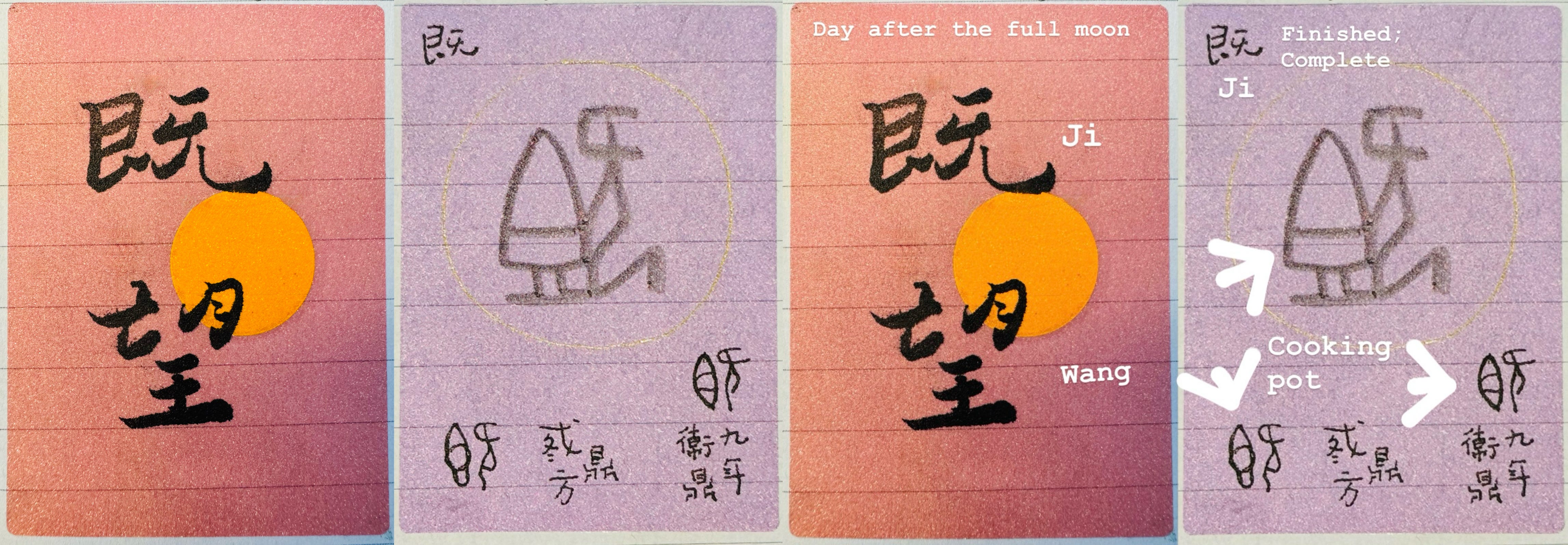
A cooking vessel on the left, steam rising from its opening (they would have been drawn in if they could but dots in oracle bone2 pictures are mostly used to describe blood); a kneeling person right next to it, facing away. It’s been interpreted as the person has completed the meal and perhaps having a quiet burp. 既 means finished, completed. Though I always thought of it as the meal is ready to serve and the person is turning around calling the family to come and join in. More delicious this way.
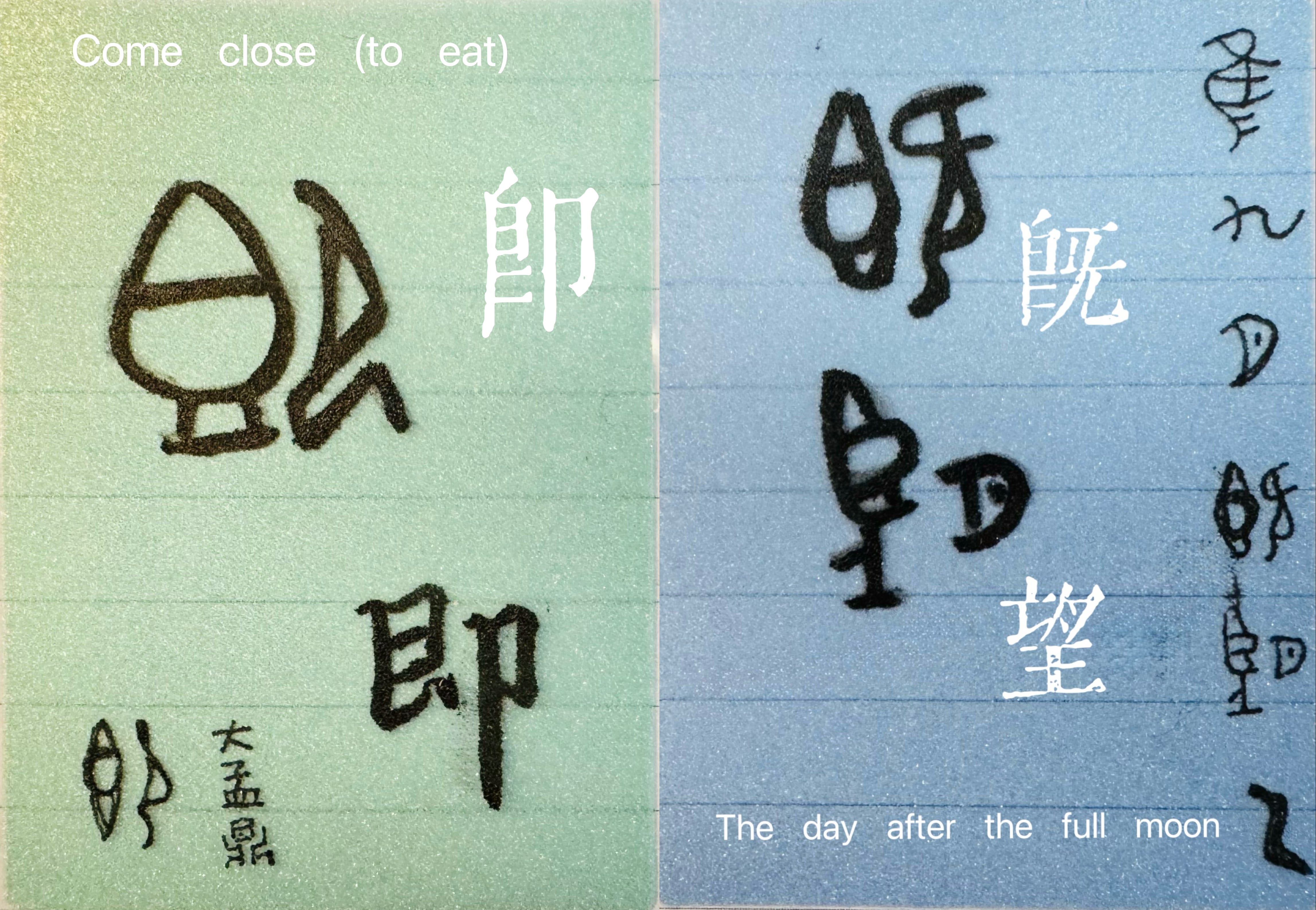
Another character almost certainly created the same time as 既,is 即. It has the same sound and means to come close. Same cooking vessel, same delicious meal, this time the person leans forward, appreciating. The character making committee is having a ball.
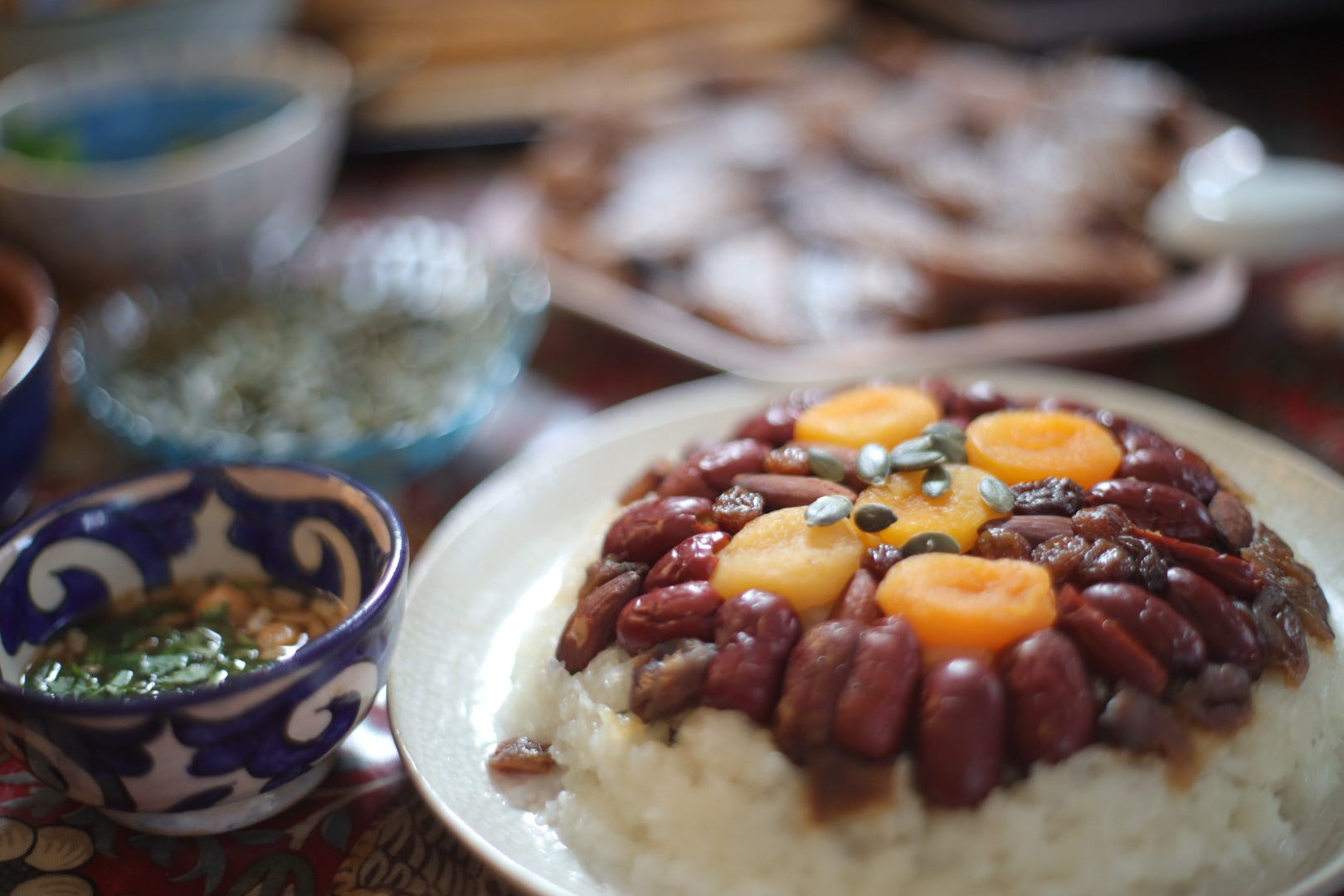
Hope a nice meal is somewhere near as you read this.
Previously, on a full moon’s day

既望: the day after the full moon.
Oracle bones script, 甲骨文,is the earliest known set of Chinese characters and the base of current Chinese characters, used mainly during Shang dynasty (1600 BC – 1046 BC). There are more than 5000 characters and around 2000 have been recognised.